
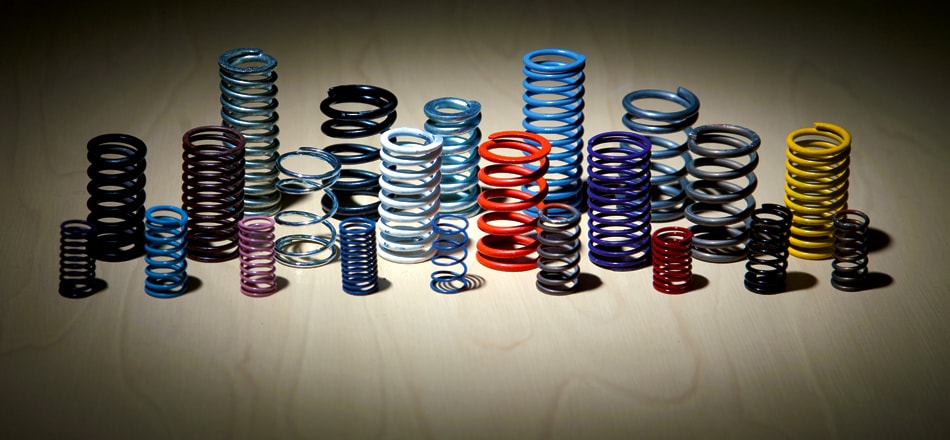
The automotive coil spring market, a critical segment within the vehicle suspension system industry, is experiencing steady growth driven by the dual engines of global vehicle production and the relentless pursuit of performance and efficiency. As a fundamental component responsible for absorbing road shocks, maintaining ride height, and ensuring tire contact, the humble coil spring is evolving with new materials and technologies to meet the demands of modern automotive design.
Market Drivers & Current Landscape:
-
Robust Vehicle Production & Parc: The post-pandemic recovery in automotive manufacturing, particularly in emerging economies across Asia-Pacific and Latin America, directly fuels demand for coil springs. Furthermore, the expanding global vehicle parc ensures a consistent aftermarket for replacement parts.
-
The Lightweighting Imperative: With stringent global emission regulations (CAFE, Euro standards), automakers are aggressively reducing vehicle weight. This drives innovation in coil spring materials, with a significant shift from traditional steel alloys toward advanced materials like fiber-reinforced polymers (FRP) and composite springs. These alternatives can offer weight savings of up to 60-70% per spring, directly contributing to improved fuel efficiency and reduced emissions.
-
Performance and Electrification Trends: The rise of electric vehicles (EVs) presents unique challenges and opportunities. EVs have heavier battery packs, requiring coil springs with different load-bearing and durability characteristics. Simultaneously, the consumer demand for enhanced ride comfort and handling in both EVs and ICE vehicles pushes for precision engineering in spring design.
-
Advancements in Manufacturing: The adoption of computer-aided design (CAD), finite element analysis (FEA), and automated manufacturing processes allows for more complex, optimized spring designs. This includes variable pitch and progressive rate springs that provide a comfortable ride under normal conditions but stiffen under heavy load for better control.
Market Segmentation Insights:
-
By Material: Steel (currently dominant), composites (fastest-growing segment).
-
By Vehicle Type: Passenger cars (largest segment), light commercial vehicles (LCVs), heavy commercial vehicles (HCVs), and electric vehicles (emerging niche).
-
By Sales Channel: OEM (Original Equipment Manufacturer) and Aftermarket.
-
By Region: Asia-Pacific leads in both production and consumption, followed by Europe and North America. China remains the epicenter of manufacturing and a key consumption market.
Key Challenges:
-
Cost Pressure: Advanced composite materials currently carry a higher price tag than steel, posing adoption challenges in cost-sensitive segments.
-
Supply Chain Volatility: Fluctuations in raw material costs (specialty steel, carbon fiber) and logistics can impact market stability.
-
Technical Hurdles: Ensuring the long-term fatigue life, corrosion resistance, and reliability of new material springs under diverse climatic conditions requires extensive R&D and testing.
Competitive Landscape:
The market features a mix of global tier-1 suppliers and specialized manufacturers. Key players include:
-
Mubea Fahrwerksfedern GmbH
-
Sogefi Group
-
NHK Spring Co., Ltd.
-
Lesjöfors AB
-
Kilen Springs
-
Betts Spring Company
-
Hyperco
-
Jamna Auto Industries Ltd.
Competition revolves around technological innovation, global supply chain presence, strategic partnerships with OEMs, and cost competitiveness. Mergers, acquisitions, and vertical integration are common strategies.
Read More in Other Languages-
https://www.zionmarketresearch.com/de/report/automotive-coil-spring-market
https://www.zionmarketresearch.com/de/report/multimedia-chipsets-market
https://www.zionmarketresearch.com/de/report/smart-water-softeners-market
https://www.zionmarketresearch.com/de/report/solid-state-lighting-market
https://www.zionmarketresearch.com/de/report/electrosurgery-devices-market
Future Outlook & Trends (2024-2030):
The automotive coil spring market is poised for steady growth, projected at a CAGR of approximately 4-6% over the next decade. Key future trends include:
-
Accelerated Adoption of Composites: As production scales and costs decrease, composite springs will move from premium vehicles to mainstream models.
-
Digital Integration & Smart Suspensions: Integration with sensor-based active and semi-active suspension systems will require springs designed as part of a holistic, digitally managed chassis ecosystem.
-
Sustainability Focus: Recyclability of materials, especially composites, and the use of eco-friendly manufacturing processes will become significant purchasing factors for OEMs.
-
Customization for Autonomous Vehicles: The specific ride comfort and packaging needs of autonomous vehicle platforms will inspire new spring design paradigms.
Conclusion:
Far from being a static component, the automotive coil spring is at the heart of transformative industry shifts toward electrification, lightweighting, and digitalization. While steel remains the workhorse, the future is increasingly composite and connected. Manufacturers who invest in material science, advanced manufacturing, and collaborative design with OEMs will be best positioned to capitalize on the opportunities in this resilient and evolving market. The road ahead for the automotive coil spring market is one of innovation, adaptation, and sustained growth.